Heart of the Valley: Man shares experience with GLP-1 medications
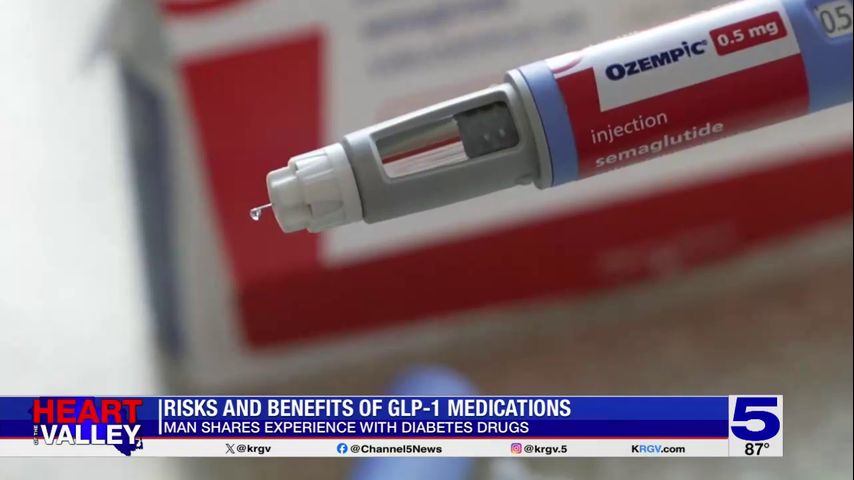
GLP-1 medications, like Ozempic and Mounjaro, help many people lower their A1C levels, but there are also risks to consider.
Jesus Mendez is offering advice to those with type 2 diabetes and are thinking of starting a GLP-1 medication.
"I decided to take Ozempic and that actually really helped with my weight and type 2 diabetes," Mendez said.
Mendez was diagnosed with type 2 diabetes in 2020.
"Some of the signs, early on, were having a difficult time with my day to day tasks. At work, I would get tired really quickly," Mendez said. "I was at my biggest 345 pounds."
When doctors first recommended a GLP-1, he wasn't sure.
"At first I was hesitant. I did not want to take it because of the fear of the side effects," Mendez said.
But he decided to give it a try. Since then, his A1C dropped from 8 percent to 5.3 percent, and he lost more than 150 pounds.
"It really did help with stabilizing my appetite and it helped with my blood sugar spikes," Mendez said.
He's been able to maintain his weight by tracking his calories and staying active.
"I had to track what I did for exercise, my strength training. Later on, I also implemented running," Mendez said.
"Resistance exercises are important since these medications cause weight loss. A lot of time, you lose protein so you lose muscle, so we want to keep that muscle mass," South Texas Health System Family Medicine Dr. Chris Casso said.
Casso says it's also important to avoid fast food and snacks with sugar and instead focus on a balanced diet.
"Make sure you are getting enough vegetables, enough fruit, enough proteins and whole grains," Casso said.
While GLP-1 medications can help, they don't come without risks.
"There can also be side effects of nausea, abdominal pain, constipation, diarrhea, dehydration," Casso said.
Casso says many of her patients with type 2 diabetes have benefited from taking GLP-1s.
In addition to lowering A1C levels, some of her patients have also stopped using insulin. The medication also reduced her patients' risk of heart disease and stroke; their kidney function also improved.
"We are basically helping save lives with this medication," Casso said.
Doctors say GLP-1 medications can help, but they're just one part of a lifestyle change you have to commit to for the long haul.
Watch the video above for the full story.
More News