Valley farmer reacts to water delivery agreement between U.S. and Mexico
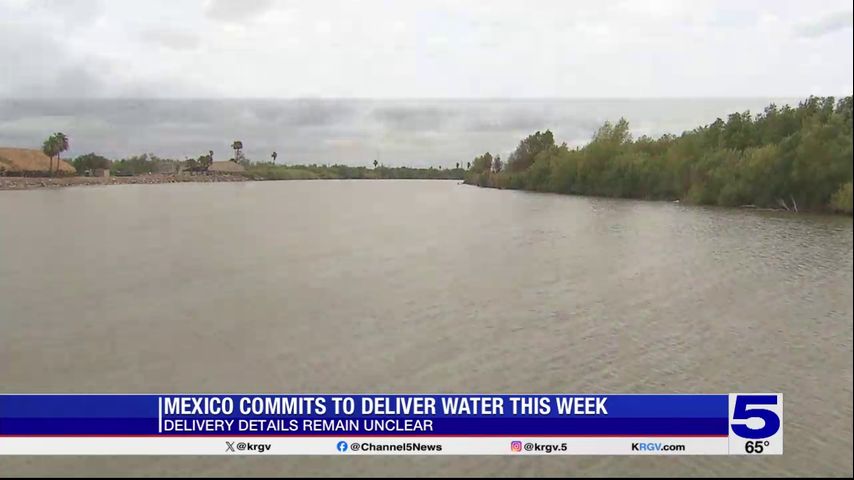
Growing produce in the Rio Grande Valley has come with challenges for several growers in the area.
For years, produce farmers such as Bret Erickson have been dealing with less water from the Rio Grande. Erickson said this caused him and other farmers to plant fewer crops, leaving fields bare.
“Ultimately the consumer's paying higher prices at the supermarket,” Erickson said. “One-third of our production we lost access to because the water district no longer had water."
The Amistad and Falcon reservoirs, which provide water to the entire Rio Grande Valley, have been low for several years.
On Friday, the U.S. Department of Agriculture announced a deal with Mexico to meet current water obligations under a 1944 Water Treaty.
The treaty requires Mexico to deliver 1.75 million acre-feet of water to the U.S. over a five-year cycle. In turn, the U.S. is expected to deliver 1.5 million acre-feet of water to Mexico from the Colorado River.
The federal government and Texas lawmakers said Mexico has continuously failed to meet those requirements, hurting the livelihoods of South Texas farmers.
More than 200,000 acre feet of water is expected to be delivered later this week, Mexico said.
“We are very grateful. It's not a lot, but it's a step in the right direction,” Erickson said.
Sonny Hinojosa, a water advocate for Hidalgo County Irrigation District #2, said neither Mexico nor the U.S. has said what day the deliveries will be made, or where the water will come from.
“If it comes in from the Rio San Juan, which I suspect will be, that is beneficial because it keeps us from having to release water from Falcón,” Hinojosa said. “But at the same time, [if it’s from] the Marte Gómez Reservoir, the lowermost reservoir has a release restriction."
Hinojosa said how that water is released is important. If it's released south of the reservoirs, they will be unable to store the water. The Rio San Juan, which connects to the Rio Grande, would do just that.
Erickson said he and other farmers worry about the quality of the water.
“There's a lot of salt in the water, there's pesticides," Erickson said. “They couldn't just release 200,000 acre feet because it would all go into the Rio Grande and it would all flow out into the gulf.”
Watch the video above for the full story.
More News