Consumer Reports: Pressure washing 101
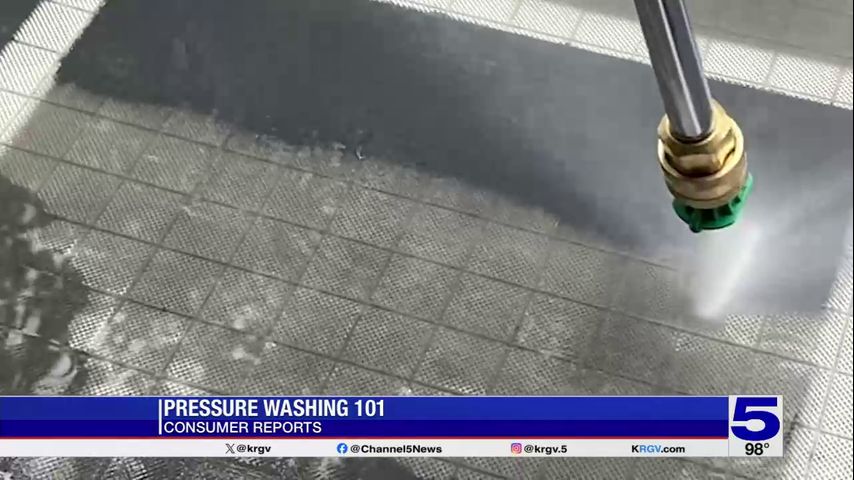
A pressure washer can blast away years of dirt and grime in minutes. But using too much power or aiming it at the wrong surface could cause significant damage. Consumer Reports explains what you can and can’t pressure-wash and how to choose the right machine and cleaner for the job.
In Consumer Reports’ tests, pressure washers blast paint from test panels. It’s impressive, but Consumer Reports’ Paul Hope warns that kind of power can quickly damage surfaces around your home. Pressure washers are great for clearing grime off surfaces, but they’re very powerful and can cause a lot of damage very quickly. Wood or stone could be nicked or etched if you’re not careful. Most wooden decks can handle light pressure, but start with a wide spray and test a small, hidden area first. Composite decking often requires only a brush, a cleaner, and a garden hose.
Vinyl, fiber-cement, and wooden clapboard siding can generally be pressure-washed carefully. Aluminum can dent, and roofing shingles can loosen, so avoid using a pressure washer on those surfaces. Pressure washing your roof can be really dangerous because you typically have to climb a ladder, and you can even damage the shingles.
On concrete driveways and walkways, a pressure washer and detergent can be especially effective against grease and mildew. Use caution on brick and stone surfaces, as they can be etched or damaged.
In CR’s evaluations, a cleaner from Simple Green did a very good job removing grease and mildew and was less toxic than some other cleaners.
If you’re looking to buy or upgrade, the right pressure washer depends on how often you’ll use it and how tough the job is. Gas models tend to be more powerful, but electrics are easier to use, so one good fix is to rent a gas-powered pressure washer, give everything a deep-clean, and then use an electric that you buy for everyday maintenance. The Bauer 23142E-B corded electric pressure washer, which costs $350, was powerful enough for a variety of household surfaces.
Consumer Reports also warns against using the narrow zero-degree nozzle, which concentrates water so much that it can cause serious injury. And always wear closed-toe shoes, eye, and hearing protection whenever you’re using a pressure washer.
More News